# Open Finance Data
source: https://developer.mastercard.com/open-finance-data/product/open-finance-data/index.md
### Use Cases {#use-cases}
#### Empowering organizations to unlock the right financial data for the right purpose {#empowering-organizations-to-unlock-the-right-financial-data-for-the-right-purpose}
#### Account Opening {#account-opening}
Verify bank account ownership for users to support fast, secure digital account-opening and onboarding journeys. Use consented bank data to confirm account details before funding, activation, or ongoing servicing.
[View documentation](https://developer.mastercard.com/open-finance-data/documentation/use-cases/account-opening-guide/account-opening-guide/)
#### Lending and Financial Management {#lending-and-financial-management}
Analyse transaction patterns, optimise finances and streamline credit decisioning processes based on account and transaction information shared by users. Retrieve transaction history to support credit decisioning, income and expense insights, and cash‑flow analysis.
[View documentation](https://developer.mastercard.com/open-finance-data/documentation/use-cases/lending-and-financial-management/)
#### Direct Debit {#direct-debit}
Validate bank account details to reduce the failure rate for direct debit setup for subscriptions, bill payments and other recurring payments. Confirm the submitted account belongs to the end user using consented bank data before the first collection attempt.
[View documentation](https://developer.mastercard.com/open-finance-data/documentation/use-cases/direct-debit/)
#### Smart Data {#smart-data}
Personalise engagement for merchants, loyalty platforms, and digital service providers by analysing consented end‑user transaction history. Use spending patterns to power smarter rewards, targeted offers, and retention experiences that feel relevant and timely.
[View documentation](https://developer.mastercard.com/open-finance-data/documentation/use-cases/smart-data-and-loyalty/)
### Why Use Open Finance {#why-use-open-finance}
Using consumer data to provide value and insight.
### 90%
of consumers are ready to share data for control, insight, and better access to credit
Mastercard, Aug 2023
### 2 in 3
shoppers would share their data for value adding personalisation
Inmar, 2021
### 92%
of consumers want identity checks to be fast and frictionless --- without compromising security
Ekata, 2024
### Key Features {#key-features}

###### Consent‑First Data Access {#consentfirst-data-access}
Enable secure access to financial data only after the end user grants explicit consent, keeping every data request purpose‑bound.

###### Guided Managed Consent Flow {#guided-managed-consent-flow}
Provide a hosted, step‑by‑step consent journey (including bank authentication) that returns the user to your app once authorization is complete.

###### Configurable Data Scope and Minimization {#configurable-data-scope-and-minimization}
Request only the data needed for each use case by tailoring consent scopes and access rules to match the purpose.

###### Standardized Account Data Retrieval {#standardized-account-data-retrieval}
Retrieve standardized account details (including identifiers and additional account information) through a consistent API experience across connected banks.

###### Transaction History with Updates {#transaction-history-with-updates}
Detailed transaction history with regular updates, and notifications when updates are available to retrieve.

###### Value Added Capabilities {#value-added-capabilities}
Optional account owner verification helps streamline account opening and other use cases.
### How it Works {#how-it-works}
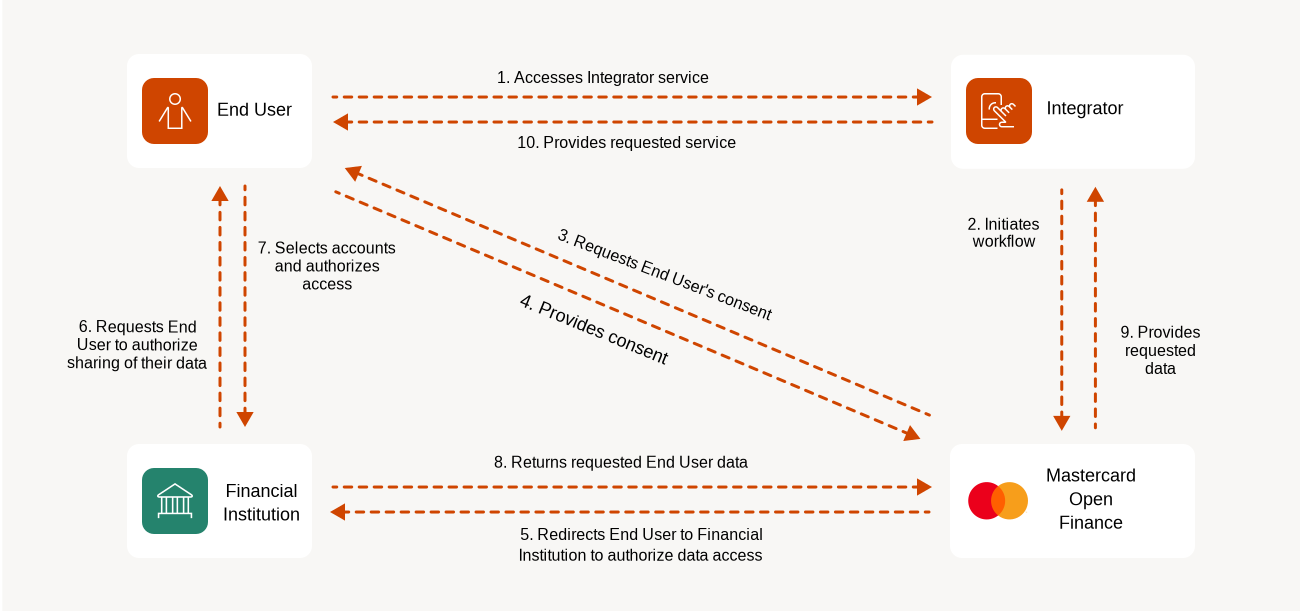
1. The End User accesses an Integrator service that requires the use of their financial data.
2. The Integrator initiates the workflow using the Mastercard Open Finance.
3. The Mastercard Open Finance requests the End User's consent to access their financial data.
4. The End User provides consent.
5. The Mastercard Open Finance redirects the End User to the Financial Institution to authorize access to their data.
6. The Financial Institution asks the End User to authorize the sharing of their data.
7. The End User selects the accounts to which access is required and authorizes that access.
8. The Financial Institution returns the requested financial data to the Mastercard Open Finance.
9. The Mastercard Open Finance provides the requested account and/or transaction data to support the Integrator service.
10. The Integrator's application uses the returned data to deliver the requested service, such as verification decisioning, subscription management, lending decision support, or loyalty personalization.
### Start building today {#start-building-today}
We designed our platform with a clear focus on simplicity. Easy to build with. Easy to set up. Easy to love.
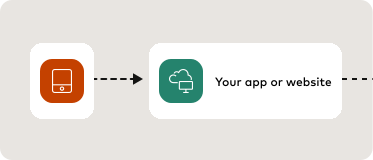
Step 1
##### Sign Up {#sign-up}
When a consumer uses your product - app or website - to open an account, you'll leverage our service and send off a request to our service
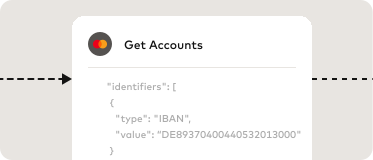
Step 2
##### Test our Sandbox {#test-our-sandbox}
Our sandbox lets you test real-world scenarios, so you can see how account information, balances, and transactions flow through a unified integration model
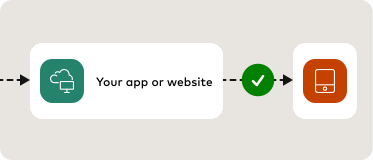
Step 3
##### Go Live {#go-live}
Unlock your chosen use case with secure, scalable access to the financial data you need --- bringing your solution to life
### Resources {#resources}
Data API
Mastercard provides developers with a low-code integration through the Open Finance building blocks.
*** ** * ** ***
**Used
By** Acquirers, Merchants, Payment Service Providers **Regions** United Kingdom, Europe
*** ** * ** ***